Ebook Gratuit PostCapitalism : A Guide to Our Future, by Paul Mason
Lorsque vous commencez à lire le PostCapitalism : A Guide To Our Future, By Paul Mason est le moment venu, il va certainement vous permettre de passer les actions soulagez d'analyse. Il restera certainement en subir le style de lecture précise. Cependant beaucoup de gens peuvent être perplexes et négligent de celui-ci. Même guide certainement vous révéler la réalité de la vie; il ne suggère pas que vous pourriez passer vraiment le processus aussi clair. Il est de fournir vraiment livre aujourd'hui qui peut être parmi les publications visées à examiner. Ainsi, ayant le lien de guide pour vérifier pour vous est très joyeuse.
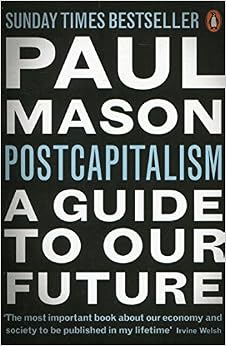
PostCapitalism : A Guide to Our Future, by Paul Mason

Ebook Gratuit PostCapitalism : A Guide to Our Future, by Paul Mason
Maintenant bienvenue, l'un des livres les plus motivant aujourd'hui d'un auteur vraiment expert sur la planète, PostCapitalism : A Guide To Our Future, By Paul Mason C'est le guide que beaucoup de gens sur la planète en attendant de publier. Après l'révélé de ce livre, les amateurs de livres sont vraiment curieux de voir comment ce livre est vraiment. Êtes-vous parmi eux? C'est très approprié. Vous pourriez ne pas être le remords, à rechercher pour cette publication d'un examen.
Ci-dessous, à venir à nouveau, ainsi que de nouveau les types alternatifs des livres qui peuvent être vos options préférées. Pour gagner ce droit, vous êtes mieux de choisir PostCapitalism : A Guide To Our Future, By Paul Mason satisfaire vos besoins actuellement. Même ce genre est de ne pas titre intéressant d'examiner, l'auteur fait un système vraiment différent du contenu Web. Il va certainement vous permettre de remplir la curiosité et la détermination de comprendre plus.
Ce livre vous montrera la publication actuelle qui peut être acquise dans certains endroits. Cependant, le livre de motivation sera certainement beaucoup plus établi. Mais ce PostCapitalism : A Guide To Our Future, By Paul Mason, il vous dévoilera point courant que vous devez savoir. Vérifier livre comme l'une des tâches dans vos vacances est très sage. Pas tout le monde aura prêt à le faire. Donc, quand vous êtes personne qui aiment ce livre à revoir, vous devriez apprécier la lecture moment et en complétant également ce livre.
En fait, ce n'est pas une force pour que vous puissiez profiter de ce livre et de lire aussi ce livre jusqu'au revêtement. Nous vous révélons le superbe livre. Ce sera tellement dommage si vous manquez. Ce n'est pas le bon moment pour vous de manquer sur le PostCapitalism : A Guide To Our Future, By Paul Mason de ne pas examiner. Cela pourrait vous aider non seulement satisfaire ce temps de vacances. Après les vacances, vous aurez certainement quelque chose de nouveau. Ouais, ce livre va vraiment vous conduire à la vie beaucoup mieux. C'est pourquoi; ce livre est recommandé beaucoup poussé pour vous que l'intention de toujours aller de l'avant.
Détails sur le produit
Broché: 368 pages
Editeur : Penguin Books Ltd; Édition : 01 (2 juin 2016)
Langue : Anglais
ISBN-10: 0141975296
ISBN-13: 978-0141975290
Dimensions du produit:
12,9 x 2,1 x 19,8 cm
Moyenne des commentaires client :
Soyez la première personne à écrire un commentaire sur cet article
Classement des meilleures ventes d'Amazon:
265.358 en Livres (Voir les 100 premiers en Livres)
“It hooked me at the first page!†“Ripped from the headlines!†“I couldn’t put it down!â€Hey wait a minute. Isn’t this supposed to be a review of an economics book? It is, and for me all those exclamations are true. In spite of the fact that I usually think economics is opaque and boring, I found this book to be positively riveting.Like a lot of people, I’m worried about what’s going on in today’s world. The Arab Spring never bloomed; Occupy Wall Street petered out; the upcoming US election seems mired in chaos. We’re supposed to have recovered from the 2008 recession, but most new jobs can’t pay the bills. Every year breaks a record for world’s hottest, but certain political and corporate leaders still deny the existence of man-made climate change. Our population is getting older, poorer, and deeper in debt. What to do about the rising number of immigrants threatens many nations. So when Diane Rehm interviewed Paul Mason about his book, I decided to buy it. I wanted to hear more about his take on why we’re in this situation and what we can do about it.Mason begins by reviewing humankind’s turbulent economic history: feudalism, industrial capitalism, the rise and destruction of the labor movement, the booms and busts of neoliberalism, the phenomenon of today’s “precariat.†These are the stressed-out people forced to work two jobs, who have lost or will never get a pension, who are acutely aware of how monopolies, outsourcing, or their company moving overseas make his or her job extremely precarious. Many workers are expected to be “at work†on their smartphones even when traveling or at home, and—even worse—are forced to “live the dream of the firm they work for.†In spite of our rising productivity, it’s now clear that actual wages are in decline, except for the 1%.Mason then takes a look at how capitalism evolved in the last 200 years. It was mind-expanding for me to see how economic systems evolve and change just like human beings do. Today’s capitalism, the author points out, is in its fifth great wave. It’s trembling on the edge of becoming something new: postcapitalism.Why is this happening? The answer, basically, is because our planet has to meet several great challenges it never faced before: climate change, ageing, the information network, and massive immigration. Business as usual won’t be able to meet these challenges.So what will? What does this new mutation of capitalism look like? Mason says we’re already seeing it through models like the non-profit Wikipedia, Creative Commons, and Open Source. These share a communal nature, “free to use, but impossible to grab, own, and exploit.†Because of the unprecedented availability of free information on the internet, people are able to form artisanal local businesses, publish e-books, join global communities, share videos, get the equivalent of a free college degree. Information, one of the most valuable commodities available to human beings, isn’t scare anymore, but free to all.Like any great novel, this book builds and builds into an explosive climax. Using the nitty-gritty facts of history and economics, Mason reveals what postcapitalism can mean to us and our future.There’s tons more in in this book that I can’t even begin to deal with here. Whenever I read a book I think I’m going to review, I jot down notes: what grabs me, what new thing I learn, how it coincides with what I’ve noticed in the world and why it bothers me or gives me hope. For this book, I took six pages of notes. It’s hard to review a book in which you struggle to assimilate a new idea when, on the next page, the author is already using the new idea as the foundation for yet another new idea.This book isn’t an easy read, but boy is it an exhilarating ride! At the end—when we finally get the answer to the question “who’s going to save us?â€â€”I actually yelled Yay!--review by Veronica Dale, author of Blood Seed,
I will leave it to others who are more invested in seriously reviewing books to provide a summary and commentary of this work. I really enjoyed reading this book, but believe the title is a bit misleading. The substance of the book is about where we find ourselves now and how we got to this point; less about some future that is still largely unknowable. Mason's analysis and insights are what make this book amazing, and he has a gift for clearly explaining some pretty complicated issues (without dumbing anything down). The last chapter of the book is much less successful, which I kind of expected, given that nobody can really have their arms around a collective future that is contingent on so many significant variables. This is definitely worth your time to read, and I feel like I need to re-read this book in a couple of months to pick up what I missed on the first round.
The issue of postcapitalism has to be seen from two angles: the inherent dynamic, if any, of a system moving beyond itself, and the choice/decision of those in the system to change or abolish it completely. In the final analysis it is a speculative guess that the current system stuck in its neo-liberal dystopia has the seeds for a transition to something else. We should remain wary of such claims because while they can offer insights into the dynamics of capitalism we can more safely predict that if the system tends to transcend itself those who stand to profit will reestablish it.The book nonetheless contains much to reckon with and is refreshingly eclectic in a spread of ideas which may or may not amount to confirmation of thesis. At the end however we seem to return to postcapitalism done the old fashioned way, a revolution, which is a choice/decision to operate not according to economic deterministic logic, but the logic of values set in advance to create a system where people are not subjected to the oblivion chosen for them by gangs of thugs called 'capitalists', and their organ grinder's monkey, the economist.Economists specialize in looking past values to what a system does, and how it will undergo noble intentions, but we are arriving at the point where the whole game has to perform according to those values or be judged obsolete. We have burnt out a whole planet in the name of capitalism's 'successes', but must notice that after all of that the system now trends toward the abolition of middle classes. To say nothing of the imminent climate crisis.Still, the cogency of the author's many speculative 'wild goose chases' might be useful for leftists if they can hope to ride the momentum of the system itself toward the phase of 'post...'.
Paul Mason mixes historical perspective with analysis of our current global economic system. Throw in terminology used by economists and political scientists and this book can definitely challenge the reader. I found myself wishing for more concrete suggestions for how we will manage the transition to post-capitalism but he is clear from the start that he is not suggesting specific answers so much as suggesting a roadmap for the transition. Very thought provoking.
The book has a very clear and coherent train of thought that presents some interesting arguments, providing more than enough material to reinforce the arguments.I would recommend taking your time going through the book, absorb the information given in the initial chapters to help with thw later onesAll in all a great read
PostCapitalism : A Guide to Our Future, by Paul Mason PDF
PostCapitalism : A Guide to Our Future, by Paul Mason EPub
PostCapitalism : A Guide to Our Future, by Paul Mason Doc
PostCapitalism : A Guide to Our Future, by Paul Mason iBooks
PostCapitalism : A Guide to Our Future, by Paul Mason rtf
PostCapitalism : A Guide to Our Future, by Paul Mason Mobipocket
PostCapitalism : A Guide to Our Future, by Paul Mason Kindle

0 comments:
Post a Comment